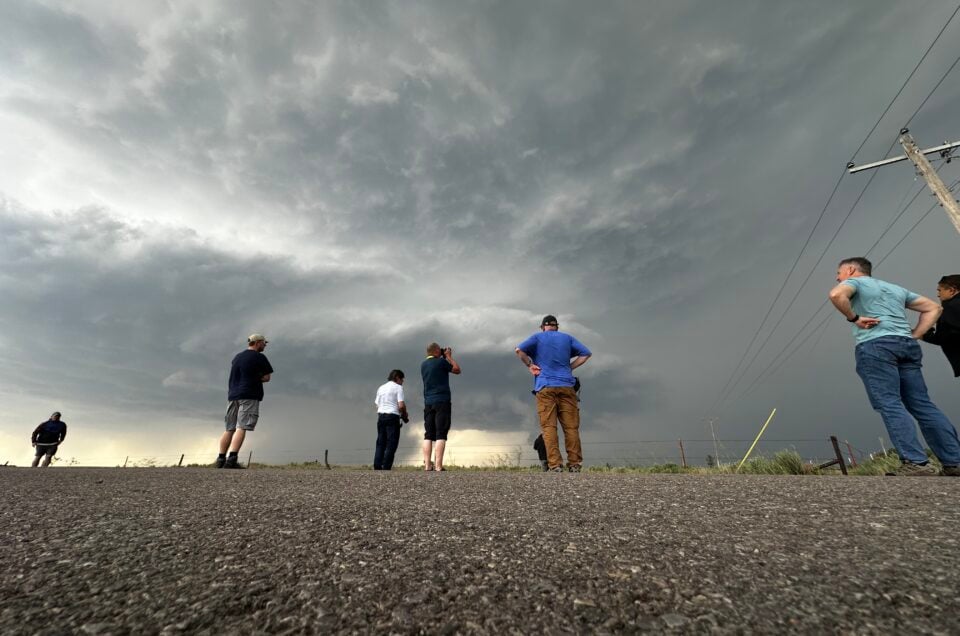
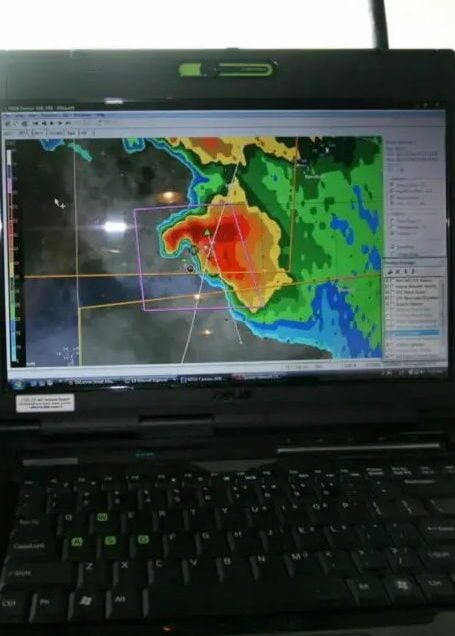
The sun slips away. The storm does not. If anything, it gets louder, stranger, and a whole lot more dramatic.
Night storm chasing is its own world. You see less, but what you do see sticks in your head for years. Here is what it looks like, what to expect, and how to get a good photo out of it.
What It Looks Like
In daylight, you see shapes. At night, you see flashes.
Lightning lights up the clouds from the inside, like a lantern with a bad switch. One second the whole sky glows. The next, nothing but black. Between flashes, your eyes work overtime, hunting for the edge of a wall cloud or a bright tower of cloud far away.
Those lit up moments can be wild. Plenty of people feel the most dramatic storm images are the ones taken after dark. Everything looks bigger when the sky is the only light in town.
Why Night Is Harder
Let us be honest. After sunset, things get tricky.
You Cannot See Much
In daylight, a tornado is easy to spot. At night, many chasers rely on lightning to get a look, and waiting for a flash is not exactly a plan. Hills and terrain make it worse. You might mistake a rain shaft for something else, or miss what is under a wall cloud.
Hazards Hide in the Dark
Flooded roads, fallen branches, and power lines are tough to see at night. That is one reason experienced chasers tend to leave night driving to professionals.
Distance Helps
Some veteran chasers prefer to keep extra space from a storm at night. From farther away, you can often see the whole storm and the lightning gives great contrast. A safe distance beats a close call every time.
What to Expect on a Tour
You do not have to figure any of this out alone. Storm Chasing Adventure Tours says its guides use radar tracking to keep guests in safe positions, and it reports a 100% safety record. Your job is to watch, listen, and enjoy the show.
Tours run in May and June in Tornado Alley, when storms are common. Expect long days that stretch into evening, plus lightning that can light up the horizon. Plans can shift with the storm, so stay flexible and keep snacks handy. A late dinner is a small price for a sky like that. A few small things help after dark:
- A small flashlight or headlamp for getting around at stops
- A warm layer, since evenings can cool off
- Patience, because some nights are quiet and some are wild
How to Photograph It
Good news. Lightning photography at night is easier than you might think, and many guests at Storm Chasing Adventure Tours bring cameras along. Start with these settings and adjust as you go.
- Camera: Manual mode, on a sturdy tripod, or a bean bag on a vehicle window
- Focus: Manual, set to infinity, since a camera cannot autofocus on a bolt
- ISO: Low, around 100 or 200
- Aperture: Near f/5.6 to f/8
- Shutter: Bulb or a timed exposure, often 10 to 25 seconds, with a remote release
Most frames will come out black. That is normal. A bolt works like a flash, so you are waiting for the sky to cooperate. Watch the storm’s rhythm for a few minutes, aim where the bolts keep landing, and open the shutter just before the next one.
Skip these common slip ups: a wobbly tripod, autofocus left on, and an exposure that runs too long and washes out the frame. If the shot looks too bright, shorten the exposure or close the aperture a bit.
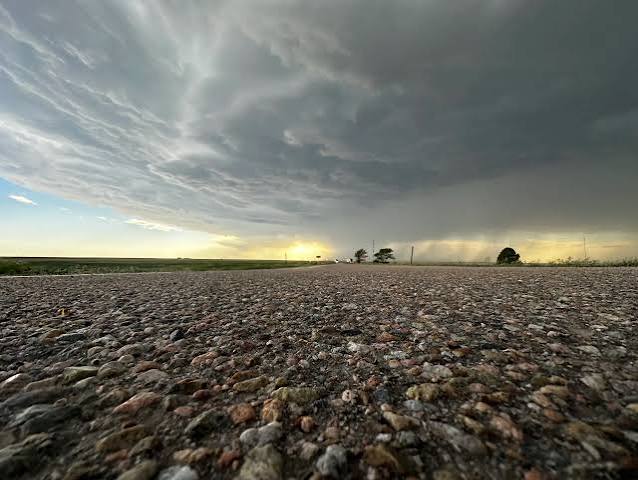
Add something to the frame, like a barn or a lone road. It gives the lightning a stage.
Safety First, Always
The National Weather Service says that if you can hear thunder, you are close enough to be struck. Get into a building or hard top vehicle, and wait 30 minutes after the last thunder. Listen to your guide, and shoot from shelter when you can.
Conclusion: Embrace the Dark Show
Night chasing asks for patience, good gear, and respect for the storm. In return, it gives you flashes of beauty you will not see any other way.
If that sounds like your kind of adventure, Storm Chasing Adventure Tours can help you see it safely, with experts guiding the way. Grab your camera. The night sky is already warming up.